Advertisement

The Complete Buying Guide

Used Car
Buyer's Guide

Everything you need to buy a used car or classic car with confidence — inspection checklists, negotiation tactics, red flags, financing, and dedicated classic car guidance for enthusiasts.

12Sections
40+Inspection points
7Negotiation tactics
2Free tools
CLASSIC MODERN
What's in this guide
01 Research Before You Shop Modern
Know before you go

The most common used car buying mistake is falling in love with a car before knowing what it's worth or what it costs to own. Do this work before you contact a single seller.

  1. 1
    Define your budget — total, not monthly

    Decide your maximum out-the-door number before you start. Monthly payment thinking lets dealers manipulate the deal. A $300/month payment over 72 months is $21,600 — always think in total dollars.

  2. 2
    Research reliability by model and year

    Consumer Reports reliability data and owner forums reveal which model years have expensive recurring problems. Some years of otherwise great cars have known transmission or timing chain failures. A little research here can save thousands.

  3. 3
    Check true market value for your specific search

    Use Edmunds TMV, KBB Fair Purchase Price, and CarGurus market analysis simultaneously. Real market value is the median of all three. Anything priced 15%+ above median deserves scrutiny.

  4. 4
    Research true cost to own

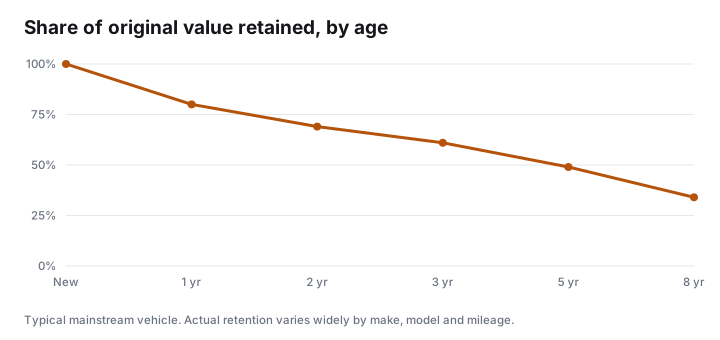
    Edmunds True Cost to Own tool factors in insurance, fuel, maintenance, and depreciation over 5 years. A $12,000 car with $4,000/year in ownership costs is more expensive than a $16,000 car with $2,500/year. Don't skip this step.

  5. 5
    Get pre-approved for financing

    Apply at your bank or credit union before visiting a dealer. Knowing your approved rate gives you leverage and removes the dealer's ability to use financing as a negotiating chip.
Advertisement
02 Pre-Purchase Inspection Checklist
Exterior — what to look for
🔍
Panel gapsStand back and sight down each panel. Uneven gaps between doors, fenders, and hood indicate prior collision repair or poor panel replacement.
🎨
Paint matchOverspray on rubber trim, mismatched metallic flake, or subtle color variation between panels signals repaint — often from accident repair.
🧲
Magnet test for fillerA small magnet won't stick to body filler (Bondo). Run one along every panel. If it drops away, filler was used — indicating hidden damage.
💧
Underbody rustGet under the car and inspect the frame rails, subframe, floorpans, and brake lines. Surface rust on exhaust is normal; rust on structural metal is serious.
🪟
Glass chips and sealsCheck all glass for chips (inspect cost: ~$200), cracks (replacement: $400–$800+), and dried or lifting window seals that can allow water intrusion.
🚪
Door operationOpen and close every door, including trunk and hood. They should open smoothly, close solidly, and latch cleanly. Sagging doors often indicate hinge wear or collision history.
Interior & mechanical
👃
Smell insideMold or mildew smell indicates water intrusion or flood damage. Cigarette smell is cosmetic but nearly impossible to fully eliminate. Both reduce value significantly.
📱
Every electronicTest AC, heat, all windows, sunroof, all USB ports, backup camera, blind spot monitors, heated seats, and infotainment. Modern electronics are expensive to repair.
🔋
Battery & chargingAsk when the battery was last replaced. A weak battery ($100–$250) is common on cars over 3–4 years old. Have it load-tested at any auto parts store for free.
🛞
Tire condition & wearCheck tread depth with a quarter (tread should cover Washington's head). Check for uneven wear — more on one edge indicates alignment or suspension issues.
🏎️
Test drive: full rangeCity stop-and-go, highway speed, and hard acceleration. Listen for hesitation, knocking, grinding brakes, transmission clunks, or steering pull at speed.
💧
Fluid conditionCheck oil (dark black and gritty = skipped changes), coolant (rusty = cooling system neglect), and transmission fluid (dark brown with burnt smell = serious problem).
Pro tip: Always order an independent pre-purchase inspection (PPI) at a shop of your choosing — not the seller's recommended mechanic. $100–$150 is the best money you'll spend. Dealers who refuse a PPI are hiding something.
03 Red Flags — Walk Away
🚨 Immediate walk-away signals
⚠️ Seller refuses an independent PPI or pressures you to decide today
⚠️ Salvage, rebuilt, flood, or lemon law buyback title on Carfax
⚠️ VIN on dashboard doesn't match door jamb sticker or title
⚠️ Frame rust, cracked frame welds, or bent structural components
⚠️ Check engine light — or recently cleared OBD codes (buy a $20 reader)
⚠️ Price dramatically below market value (always a reason)
⚠️ Seller can't produce a title or stalls on showing paperwork
⚠️ Mileage inconsistency on Carfax vs odometer (rollback fraud)
Green lights — signs of a well-maintained car
✓ Complete service records from a dealership or shop
✓ Single owner, no accidents on Carfax report
✓ Recent timing belt / chain service documented
✓ Original window sticker or purchase documents still with the car
✓ Seller knows the car's history in detail and answers openly
✓ Clean, consistent undercarriage with no repair welding
04 How to Negotiate the Price
7 tactics that actually work
  1. 1
    Always negotiate out-the-door (OTD) price

    The OTD price includes taxes, title, and all fees. Never negotiate monthly payments — dealers extend loan terms to make higher prices feel affordable. Get one total number on paper.

  2. 2
    Anchor low but stay credible

    Open 10–15% below your target price, not 40% below. An insulting offer closes negotiation. A serious low offer starts it. Have comparable listings ready to justify your number.

  3. 3
    Use the inspection report as leverage

    Every issue your mechanic finds is a negotiating point. "The inspection found $800 in needed repairs — I'd like that reflected in the price" is a completely reasonable ask, not rudeness.

  4. 4
    Keep trade-in completely separate

    Never mention your trade-in until the new purchase price is fully agreed. Dealers use trade-in allowances to offset discounts invisibly. Get a Carvana or CarMax offer first as your baseline.

  5. 5
    Email multiple dealers simultaneously

    For similar vehicles at multiple dealers, email all of them with the same request for best OTD price. Dealers compete hard via email. You'll often get 3–5 offers within hours without leaving home.

  6. 6
    Decline all F&I add-ons by default

    The finance office is a profit center. Extended warranties, GAP insurance, paint protection, and tire packages are always overpriced at a dealership. Extended warranties from third-party providers like Endurance or CARCHEX typically cost 40–60% less.

  7. 7
    Be willing to walk — genuinely

    The most effective negotiating tool. Stand up, thank them, and move toward the door. Most dealers will follow with a better number. If they don't, you were already at their floor — or there's a better deal elsewhere.

Best time to buy: End of month, end of quarter, and holiday weekends (Memorial Day, Labor Day, Black Friday) when dealers are chasing sales targets and manufacturer incentives. Rainy weekdays also mean less foot traffic and more negotiating flexibility.
Advertisement
05 Financing a Used Car
Where to get the best rate

Credit Unions

  • Typically lowest rates for members
  • More flexible approval criteria
  • Join before you need the loan
  • Navy Federal, PenFed widely accessible

Banks & Online

  • Capital One Auto, LightStream competitive
  • Pre-approval takes minutes online
  • Rate shopping doesn't hurt score (14-day window)
  • Bring approval letter to dealership

Dealer Financing

  • Convenient but often marked up 1–3%
  • Manufacturer rates can be excellent
  • Always compare to your pre-approval
  • Good for 0% APR promotional offers
Rule of thumb: Never finance a used car for more than 48 months. Long loan terms on depreciating assets put you "underwater" — owing more than the car is worth — for years. If you need 72+ months to afford payments, the car is outside your budget.
06 True Cost of Ownership
True cost of ownership calculator

Enter your numbers to see a realistic picture of what that used car will actually cost you per month and per year — beyond the sticker price. Based on national average data from AAA and Edmunds.

$
% APR
$
mi
MPG
$
Total/month
Total/year
5-year cost
Cost per mile
    Insurance tip: Get insurance quotes before buying — not after. Some models carry premiums 40–80% higher than average. For a personalized insurance estimate, compare quotes at Insure.com or PolicyGenius. For true 5-year ownership cost by specific model, use the Edmunds True Cost to Own tool.
    07 Classic Car Buying Guide Enthusiast
    🏆 For Enthusiasts
    Why Classic Cars Are Different

    Buying a classic car is fundamentally different from buying a modern used car. The rules, risks, resources, and rewards are all magnified. A well-chosen classic can hold or appreciate in value. A poorly-chosen one can become a financial sinkhole that consumes every weekend for years. Here's what you need to know before entering the collector car market.

    Condition grades — the universal language of classic car values
    Grade 1 Concours / Show Quality Flawless, better-than-new restoration or exceptional survivor. Top 1% of examples. Commands a significant premium. Often trailered to shows.
    Grade 2 Excellent Driver Very well restored or an exceptional original. Minor imperfections only visible on close inspection. The sweet spot for most buyers.
    Grade 3 Good Driver Presentable and drives well, but shows its age. Some cosmetic flaws, possible non-original parts. Good value — can be enjoyed immediately.
    Grade 4 Project / Driver Needs work. May be complete and running or partially disassembled. For mechanically skilled buyers willing to invest time and money.
    The #1 classic car buying mistake: Buying a Grade 4 project thinking you'll restore it for less than a Grade 2's price. Restorations almost always cost 3–5x initial estimates. Unless you have the skills to do the work yourself, buy the best example you can afford — it's almost always cheaper in the long run.
    08 Classic Car Inspection Guide Enthusiast
    What matters most on a classic car

    A classic car inspection requires different priorities than a modern car. Rust, originality, and numbers-matching components are the critical factors that determine both value and cost of ownership.

    🦠
    Rust — the classic car killerInspect floor pans, trunk floor, frame rails, rocker panels, and wheel arches. On unibody cars, look for rust at the cowl (base of windshield). Rust in these areas can cost more to repair than the car is worth.
    🔢
    Numbers matchingThe VIN, engine stamp, transmission tag, and trim tags should all match the car's build records. Non-matching numbers significantly reduce value. Request a Marti Report (Fords), Protect-O-Plate (GM), or broadcast sheet before buying.
    📋
    Documented historyOriginal window sticker, build sheet, title history, and old photos are gold. A car with documented provenance is worth meaningfully more than an identical car without records.
    🔩
    Originality of componentsAre the engine, transmission, interior, and trim original to the car? Replaced components reduce value but may also mean the car has been maintained. Date-coded components on classic Mopars, GMs, and Fords matter to collectors.
    🔧
    Quality of past restorationA bad restoration is often worse than no restoration. Look for orange-peel paint, overspray under the hood, incorrect fasteners, missing trim clips, and sloppy engine bay detailing that hides neglect.
    💧
    Engine and drivetrain conditionCheck for oil leaks at the valve covers, pan, and rear main seal. Look for coolant in the oil (milky oil on dipstick = head gasket issue). Run it to operating temperature and listen for rod knock or lifter tick.
    🧰
    Get a marque-specific inspectorFor any classic over $20,000, hire an inspector who specializes in that specific make. A Corvette specialist will catch things a general mechanic misses entirely. Marque clubs often maintain inspector referral lists.
    📸
    Photograph everythingTake 200+ photos before buying — every panel, underneath, engine bay, trunk, VIN tags, and interior. These protect you legally and create a baseline record for the car's history going forward.
    Advertisement
    09 Classic Car Market & Values Enthusiast
    📊 Market Guidance
    What's Hot, What's Not

    The collector car market is driven by generational nostalgia — buyers spend their peak earning years acquiring the cars they dreamed about at 16. Understanding which generation is entering peak earning years helps predict which categories have momentum. Use this framework alongside current Hagerty and BaT data to time your buying and selling decisions.

    Category Examples Driver of value Key considerations
    American muscle (1964–72)Mustang, Camaro, Chevelle, ChargerBoomer / early Gen X nostalgiaBlue-chip collectibles; entry prices are high; condition and numbers-matching matter most
    Japanese sports (1980s–90s)Supra, NSX, R32 GT-R, FC/FD RX-7, S13/S14Gen X / Millennial nostalgiaStrong sustained demand; prices reflect scarcity; condition and originality command major premiums
    European sports (1970s–80s)911, BMW E30/E28, Ferrari 308, Alfa SpiderCross-generational appealAir-cooled 911 and E30 are established collectibles; maintenance costs are the key risk factor
    American trucks (1967–87)C10, F-100, K5 Blazer, BroncoGen X / Millennial lifestyle appealSquare-body trucks have seen dramatic appreciation; restomod culture expanding the buyer pool
    Malaise era (1973–83)Trans Am, Corvette C3, luxury sedansContrarian / Gen X nostalgiaLong undervalued relative to pre-emissions muscle; quirky appeal growing among younger collectors
    Pre-war / 1950sHot rods, custom builds, early CorvettesBoomer-era buyersBuyer demographics aging; fewer younger enthusiasts; strong at top of market, softer mid-range
    1990s–early 2000s JDMCivic EK/EG, Integra Type R, Evo, STIMillennial nostalgia + 25-yr import rule25-year import rule steadily opening new supply; enthusiast community active and global
    European luxury (1980s–90s)W126 Mercedes, E34 BMW, Porsche 968Driver-focused buyersHigh ongoing maintenance costs historically cap appreciation; exceptional driver value for enthusiasts
    Where to find real values: Hagerty Valuation Tools and bring a trailer (BAT) sold listings are the gold standard for classic car pricing. NADA Classic and Collector Car values are a secondary check. Always look at completed auction results — not asking prices — for real market data.
    10 Financing a Classic Car Enthusiast
    Classic car financing is different

    Standard auto loans don't work for vehicles over 10–15 years old. Most lenders won't touch them. Here's how collector car financing actually works.

    1. 1
      Specialty collector car lenders

      JJ Best Banc, Woodside Credit, and Collector Car Lending specialize in classic and collector car loans. They understand market values and can finance cars that traditional banks won't touch. Compare current rates directly — collector car loan rates move with the broader interest rate environment.

    2. 2
      Credit unions with classic car programs

      Some credit unions (DCU, Alliant, Pentagon Federal) offer collector car loans with competitive rates. Membership is often open to anyone. Call ahead to confirm they finance vehicles of your car's age and value.

    3. 3
      Home equity loans or lines of credit

      If you have significant home equity, a HELOC often offers the lowest interest rate for a classic car purchase. Interest may also be tax-deductible. The risk: your home secures the loan.

    4. 4
      Marque-specific financing programs

      Some manufacturers and marque clubs have financing partnerships. Porsche Financial, for example, offers financing on certified pre-owned Porsches of varying ages. Check your marque's club for partnerships.

    5. 5
      Classic car insurance is mandatory and distinct

      Standard auto insurance significantly undervalues classic cars. Agreed value policies from Hagerty, Grundy, American Collectors, or Heacock Classic insure for a pre-agreed amount — not ACV — and are often cheaper than standard insurance. Get this before the car is paid for.

    11 Trusted Resources
    12 Frequently Asked Questions
    How many miles is too many on a used car?
    Mileage matters far less than maintenance history and condition. A 120,000-mile car with full service records is often a better buy than an 80,000-mile car with no records. Most modern engines, properly maintained, are designed to last 200,000+ miles. What matters: were oil changes done regularly (every 5,000–7,500 miles for conventional oil, every 10,000 for synthetic)? Was the timing belt or chain serviced on schedule? Has the car lived in a rust-prone climate? Answer those questions rather than fixating on mileage.
    Is it better to buy from a dealer or private seller?
    Each has tradeoffs. Private sellers typically offer lower prices (no overhead), but you have less recourse if problems emerge and no warranty. Dealers offer certified pre-owned warranties, financing, and title handling — but prices are higher and negotiation can be more adversarial. For high-mileage or older cars where issues are harder to detect, a CPO dealer warranty adds real value. For lower-mileage, well-documented cars, a private seller often offers the best value.
    What is a Carfax report and is it enough?
    A Carfax report aggregates data from insurers, DMVs, and repair shops to show a vehicle's history. It's a valuable starting point — it can reveal accidents, multiple owners, title issues, odometer fraud, and open recalls. However, it's not comprehensive: unreported accidents (cash transactions, out-of-network repairs), flood damage, and frame damage may not appear. Always combine a Carfax report with a physical inspection and an independent mechanic's pre-purchase inspection. AutoCheck is a competing report worth running as well — they source data differently and sometimes catch things Carfax misses.
    What makes a classic car a good investment?
    The most reliable appreciators share several characteristics: they're from an iconic model or era, they're optioned significantly (original high-performance engine, rare color, desirable factory options), they have documented history and provenance, they're numbers-matching, and they're in the upper condition grades (1 or 2). However, buying a classic car purely as an investment is risky — the market is illiquid, storage and insurance are ongoing costs, and appreciation is never guaranteed. The best approach: buy cars you genuinely love and would be happy owning even if they never appreciate. Passion and investment rarely conflict with the right car.
    What is the 25-year import rule for JDM cars?
    Under U.S. federal law (the Motor Vehicle Safety Compliance Act), vehicles that don't meet U.S. safety and emissions standards can be legally imported once they're 25 years old. This is why Japanese domestic market (JDM) vehicles — like the R32 Nissan Skyline GT-R, Honda Beat, and Mitsubishi Pajero Evolution — have been arriving in the U.S. in large numbers since around 2014. The rule opened a door for enthusiasts to legally own right-hand-drive Japanese sports cars that were never sold in America. State registration requirements vary; some states (California, Florida) have additional hurdles. Work with a licensed importer and verify compliance before buying an imported vehicle.
    How much should I budget for classic car maintenance?
    A rough rule: budget 10–20% of the car's value per year for maintenance and storage if you plan to drive it regularly. A $30,000 classic might cost $3,000–$6,000 annually in upkeep, insurance, and storage. Driven rarely and stored properly, that number can drop significantly. The big variables: age (older = more maintenance), rarity of parts (German and Italian cars have significantly higher parts costs than American cars), and whether you can wrench yourself. Fuel costs are also higher — most classics run best on premium fuel and get 10–18 MPG. Build a dedicated fund before you buy.
    Advertisement